PLC Programming: Improving Efficiency in Modern Industrial Automation
Servotech is a leader in embedded software tools, offering advanced solutions that integrate seamlessly with hardware to optimize performance and efficiency. Our tools are engineered to support industries like automotive, industrial automation, and consumer electronics, delivering reliable, high-quality software tailored to meet specific needs. Discover how our innovative embedded solutions can enhance your technology and drive success in a connected, fast-paced world.
PLC Programming: Improving Efficiency in Modern Industrial Automation
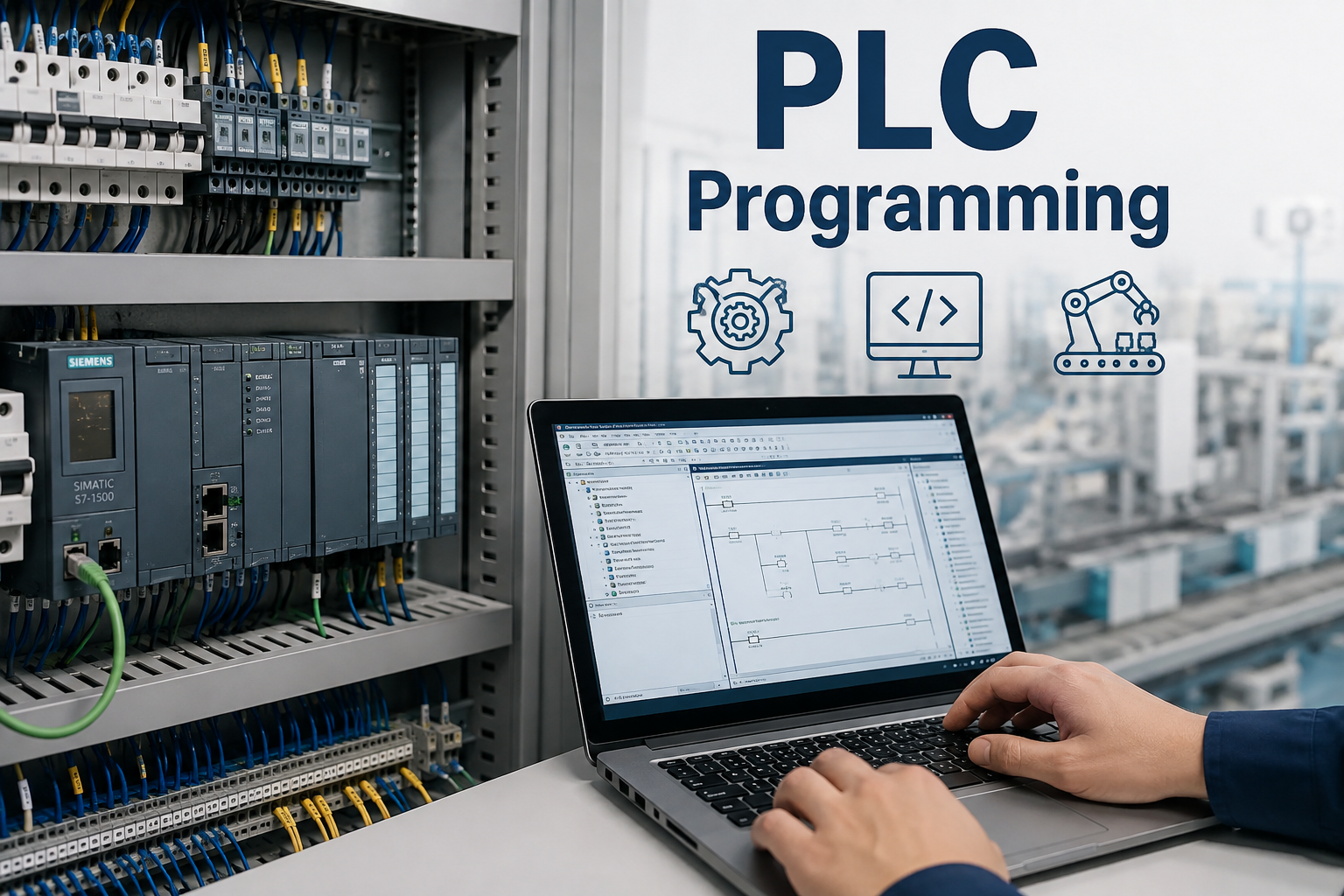
Industrial automation has transformed the way modern manufacturing facilities operate. One of the most important technologies behind automated industrial processes is PLC Programming . Programmable Logic Controllers (PLCs) are used to control machines, production lines, motors, sensors, and other industrial equipment.
PLC programming allows engineers to create control logic that determines how machines should operate under different conditions. This makes industrial processes more consistent, reliable, and efficient.
What Is PLC Programming?
PLC Programming is the process of creating instructions that control a Programmable Logic Controller. These instructions allow the PLC to receive information from sensors and input devices, process that information, and control output devices such as motors, valves, conveyors, and robotic systems.
Common PLC programming languages include Ladder Logic, Function Block Diagram, Structured Text, and Sequential Function Chart. Ladder Logic is particularly popular in industrial environments because it is easy for technicians and engineers to understand.
Benefits of PLC Programming
One major advantage of PLC programming is improved automation. Instead of manually controlling every stage of a production process, a PLC can automatically execute predefined operations.
Other benefits include:
Improved production efficiency
Reduced manual intervention
Reliable machine control
Easier troubleshooting
Flexible process modification
Better production consistency
Improved safety and monitoring
Role in Factory Automation
PLC programming is widely used in factory automation applications such as conveyor systems, packaging machines, assembly lines, material handling systems, and process control equipment.
A properly programmed PLC can coordinate multiple machines and devices, helping manufacturers maintain smooth production workflows while reducing downtime.
Conclusion
As industries continue adopting automation technologies, PLC Programming remains an essential part of industrial control systems. Effective PLC programming can help businesses improve machine performance, production efficiency, reliability, and process control.
For manufacturers looking to modernize their operations, investing in reliable PLC-based automation can be an important step toward building a more efficient and scalable production environment.